
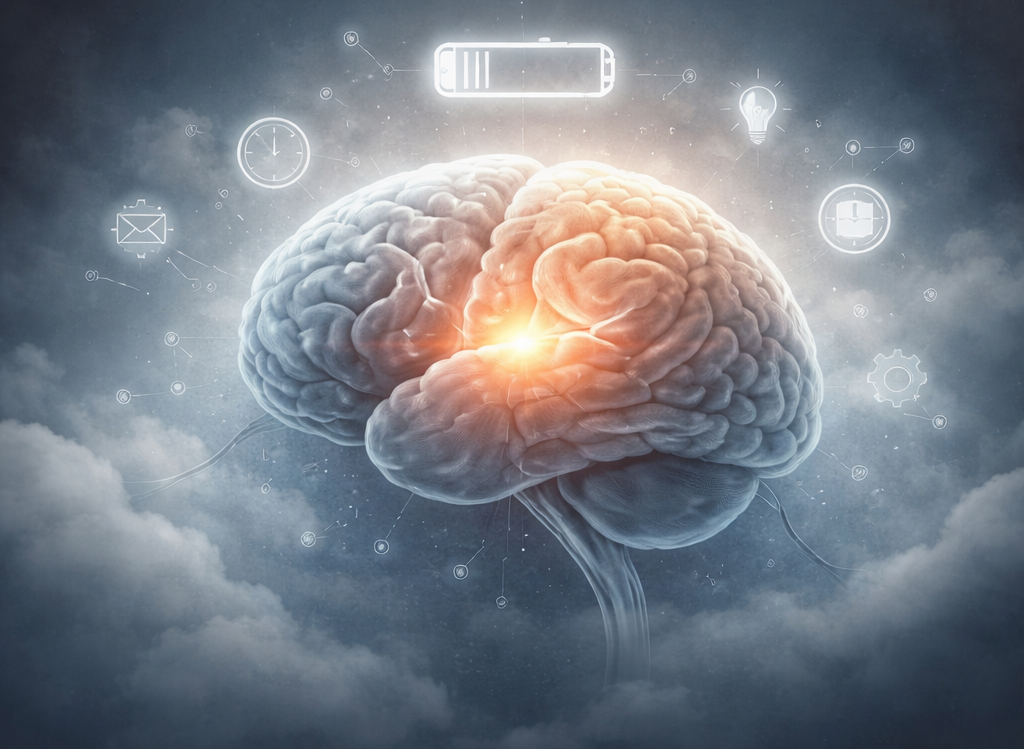
Mental fatigue is one of the most common yet misunderstood reasons people struggle with focus, brain fog, and declining productivity.
Before I talk about other people, I want to share my own experience. I struggled to focus and was unable to complete the tasks I needed to finish.
Many people assume that difficulty concentrating comes from laziness or lack of motivation, but research in neuroscience and cognitive psychology shows that mental fatigue is a real biological response.
In a world of constant notifications, long screen hours, and information overload, mental fatigue is becoming increasingly common. Understanding why your brain feels tired is the first step toward improving focus naturally and protecting long-term performance.
What Is Mental Fatigue?
Mental fatigue is a state of cognitive exhaustion that occurs when the brain is exposed to sustained mental effort without adequate recovery. It reduces attention, slows thinking, weakens decision-making, and lowers motivation.
Unlike physical fatigue, which affects muscles and physical endurance, it affects the brain’s executive functions. These functions control focus, self-regulation, working memory, and the ability to stay mentally engaged.
Simply put, mental fatigue happens when your brain’s energy and attention systems are overused.
Harvard research shows that strategies such as structured work blocks and avoiding multitasking can help preserve your attention span and reduce cognitive overload.
(link to Finding Your Focus)
Why Does Your Brain Feel Tired?
The brain is one of the most energy-demanding organs in the body. Even when you are not physically active, it consumes a large portion of your daily energy. Prolonged concentration, problem-solving, emotional stress, and constant information intake place additional strain on these systems.
As mental effort continues, chemical by-products accumulate in areas of the brain responsible for attention and self-control. At the same time, neurotransmitters involved in motivation and focus become less efficient. These changes reduce cognitive performance and create the familiar sensation of brain fog, mental heaviness, or difficulty concentrating.
This response is protective. Mental fatigue acts as a signal that the brain needs recovery before performance and judgment decline further.
Mental Fatigue Self-Check
Answer these 7 questions honestly to see if you might be experiencing mental fatigue. This is for educational purposes only.
What Causes Mental Fatigue in Modern Life?
Mental fatigue usually develops gradually through everyday habits rather than extreme workloads. Long periods of screen exposure keep attention systems constantly engaged. Frequent multitasking forces the brain to repeatedly shift focus, which consumes more mental energy than sustained attention. Chronic stress keeps the nervous system activated for extended periods, accelerating cognitive exhaustion.
Poor sleep prevents the brain from clearing metabolic waste and restoring neurotransmitter balance. Continuous exposure to notifications, social media, and information overload leaves little opportunity for mental recovery. Over time, these factors combine and result in persistent mental fatigue.
Common Signs of Mental Fatigue
Mental fatigue often appears subtly and becomes more noticeable over time. You may experience difficulty concentrating, slower thinking, forgetfulness, or trouble making decisions. Tasks that once felt manageable can start to feel heavy.
Emotionally, mental fatigue may show up as irritability, reduced motivation, or a constant sense of mental overwhelm. Behaviorally, it often leads to procrastination, avoidance of mentally demanding tasks, and declining productivity.
These are not character flaws. They are signs that your brain’s cognitive systems are overloaded.
How Mental Fatigue Affects Focus and Productivity
Focus relies on the brain’s ability to allocate attention efficiently and suppress distractions. Mental fatigue weakens both of these processes. Working memory becomes less reliable, impulse control declines, and attention drifts more easily.
This is why pushing harder rarely solves focus problems. Willpower cannot compensate for depleted mental energy. Sustainable focus improvement begins with managing mental fatigue rather than forcing productivity.
This principle forms the foundation of improving focus naturally and maintaining long-term cognitive performance.
How to Recover From Mental Fatigue Naturally
Recovering from mental fatigue does not require stopping work altogether. It requires restoring the brain’s capacity to function efficiently.
Quality sleep plays a central role because it allows the brain to clear waste products and rebalance neurotransmitters involved in attention and motivation. Structuring work into focused periods with intentional breaks helps prevent cognitive overload. Light physical movement improves blood flow to the brain and supports mental clarity. Stress-management practices reduce prolonged cortisol exposure, allowing cognitive systems to recover. Consistent hydration and balanced nutrition help stabilize the brain’s energy supply throughout the day.
When practiced consistently, these habits rebuild mental stamina and protect focus over time.
Can Mental Fatigue Be Prevented?
Mental fatigue is largely preventable when energy is managed intentionally. Reducing unnecessary multitasking, limiting constant notifications, and protecting periods of uninterrupted focus significantly lower cognitive strain.
Aligning demanding tasks with peak mental energy hours and allowing recovery between sessions preserves long-term brain performance. Prevention is not about doing less work, but about working in ways that respect how the brain functions.
Mental Fatigue vs Physical Fatigue
Mental fatigue primarily affects thinking, attention, emotional regulation, and decision-making. Physical fatigue affects muscles and physical endurance. While both can occur together, they require different recovery strategies.
Recognizing the difference helps prevent burnout and supports overall performance.
Frequently Asked Questions
Can mental fatigue cause anxiety or emotional instability?
Yes. Mental fatigue increases stress sensitivity and reduces emotional regulation, which can make anxiety symptoms more noticeable.
Does sleep alone fix mental fatigue?
Sleep is essential, but lasting recovery also requires managing daily cognitive load, stress, and focus habits.
Is caffeine a long-term solution for mental fatigue?
Caffeine may temporarily mask fatigue, but it does not restore mental energy and may worsen long-term exhaustion if relied on excessively.
Final Thoughts
Mental fatigue is not a personal failure or lack of discipline. It is a biological signal that the brain’s cognitive systems need recovery.
By understanding why your brain feels tired, you can move away from forcing productivity and toward supporting focus naturally. This approach leads to clearer thinking, stronger concentration, and sustainable mental performance over time.
For practical strategies and daily habits, explore our complete guide on how to improve focus naturally and build lasting cognitive clarity.
About the Author
Written by The Youth Vibe -Kieran M.
The Youth Vibe publishes psychology-informed, exercise based and neuroscience-aligned content designed to help young adults improve focus, mindset, and mental performance naturally. Our articles are educational in nature and grounded in established research and real-world cognitive behavior.